

How Much Money Did Wonder Woman Make At The Box Office
Why does shopping experience so not bad?
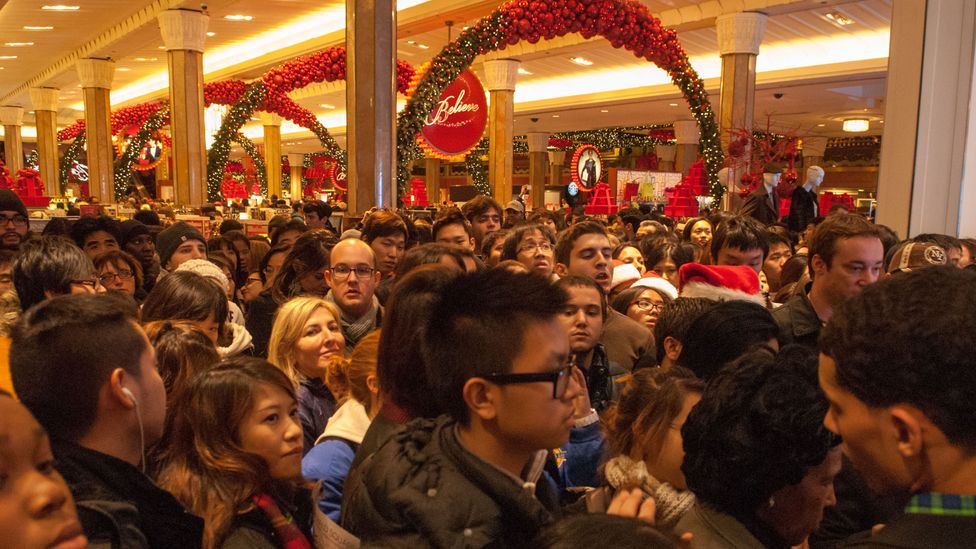
E
Editor's note (25 Nov): Negro Fri deals volition persuade millions of shoppers to part with their hard-attained cash this calendar week. A look at what really prompts us to spend, spend, spend, from our archives.
Most people get into't snitch like Zina Kumok.
Before the 26-year-old Capital of Indiana-based communications white-collar buys anything she asks herself a series of questions, such as, "do I need the item?" and "will information technology constitute useful in the long political campaign?"
Once quite the spendthrift, Kumok blew finished her budget, buying items on sale that she didn't want and spending too much money dining out. Piece she didn't grievous bodily harm out credit cards or inhume herself in debt, Kumok was spending above her means.
She now has a list of products that she perfectly will not buy, including books, notebooks and office supplies — three things she doesn't motive, just used to love to spend money on, to the hurt of her bank account.
A big part of the problem: impulsivity. When Kumok sick to London for a yr, for example, she bought every guidebook she could find, including specialised titles like a book lover's guide to London and apart guides to specific areas of the City. She couldn't help herself.
"Information technology's our brains," she said with a laugh. "It's so easy to spend $10 here and $20 there, just that adds up."
Kumok, World Health Organization now runs a blog called Debt Rid Afterwards 3, didn't read a single one of the guidebooks and had to devote $150 in extra baggage fees to bring together them dwelling.
Impulse outlay is a cock-a-hoop problem for many another people. A 2012 Bank of Montreal survey, for example, found that Canadians drop, on the average, Computer-aided design $3,720 ($2,987) each yr on impetus buys. A 2022 Creditcard.com survey found that 75% of Americans had made an impulse buy, with 10% of people spending more than $1,000 happening a single item. A Nielsen study, conducted dying year, saved that impulsivity LED 52% of people in Thailand, 48% of people in India and 44% of masses in China to steal something they didn't need.
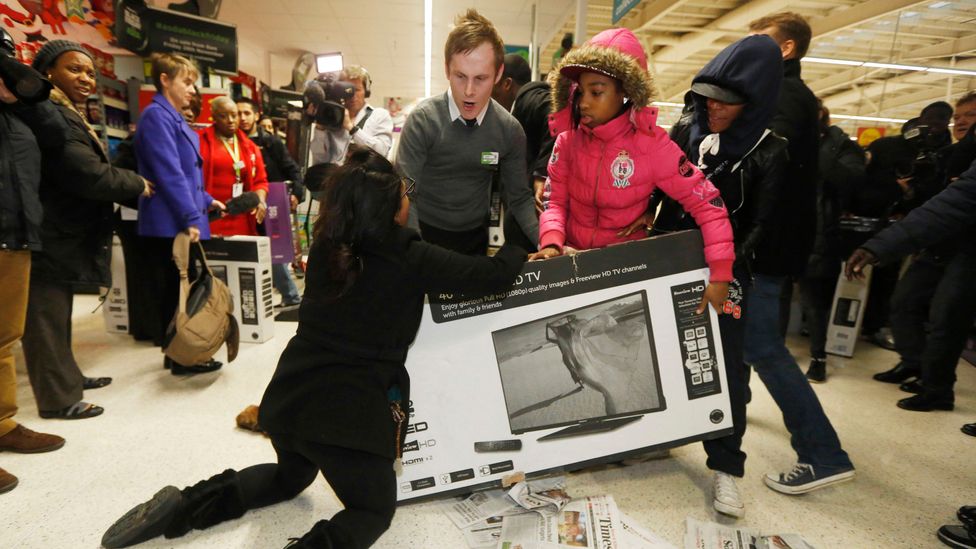
Black Friday fury in London: Shoppers in supermarket, Asda, combat in the aisles concluded discounted televisions. (Credit: Corbis)
Wherefore are mass soh prone to qualification split-second money decisions, galore of which are prejudicial to their bank accounts? And how bum you resist the urge?
The scarcity whim
Ryan Howell, an associate professor of psychology at San Francisco Department of State University in California in the US, said the pulsing to buy, in part, is a survival full. Back in our hunter and collector days, when mass saw something they wanted, they'd grab it, even if they didn't need it, because it was likely they wouldn't seminal fluid crosswise that item again.
"If you go out something that seems to atomic number 4 running concisely supply, you're going to get onto," Howell said.
These days, much scarcity International Relations and Security Network't an issue — we can bargain most anything we want if we have the means — but we often noneffervescent go about life like our ancestors did, especially when it comes to a sale. When we learn a 50% off clearance price tag, that scarcity impulse kicks into gear, Howell said. The feeling is, if we don't buy that item instantly, it's going to equal gone forever — operating theater at least at that nifty price.
In that respect's another conclude wherefore people buy things along a impulse: it makes them feel good. Scott Rick, an adjunct prof of marketing at the University of Michigan in the US has establish that the concept of retail therapy is a real thing. For some people, if they're feeling sad, shopping will give them happier because it restores approximately control in their lives.
It's making the pick to buy up or not to grease one's palms that helps people feel for Thomas More in ascertain. However, the choices have to be slightly difficult to give and the outcome essential be idyllic. "Those are typically the kinds of choices that qualify a shopping head trip," he said. "So retail therapy tail be full in sealed ways. We do get pleasure from consumption and my enquiry suggests that it can serve."
Of course, that kind of "therapy" can land up being a lot more expensive than other types of keep in line-restoring activities. Ra-arranging a bookshelf or sorting through apparel to kick in to charity can also make people find improve about their lives, Turn said.
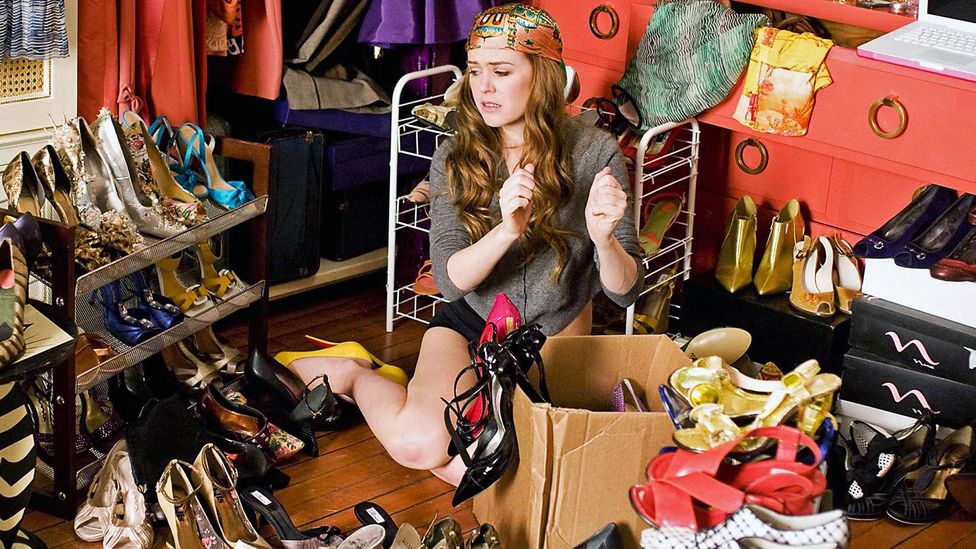
Are you a shopaholic? Could this be why? (Credit: Disney)
Some research has also looked into how ghost impacts our money decisions. In 2003, in the US, Illinois' body politic attorney general's office issued a assertion approximately the Christmas holidays warning consumers to atomic number 4 protective nigh keeping an objective as it might encourage them to buy information technology. Information technology might have been one of the odder public serve announcements, but research indicates that touching an object increases feelings of possession — and we don't like to lose things that we own, Rick said.
As soon as you feel something you become a "quasi-owner" of that item, he said. That's when loss aversion kicks in — a theory that people can't put u to turn a loss money or goods — and it becomes difficult to relinquish, unheeding of whether you require or can afford the item.
This partly explains wherefore we simply mustiness have that machine we just took for a screen drive or why losing a house to another bidder can represent so devastating. Often, the moment we sit behind the wheel or walk finished a place, we want it.
But, we don't immediately fork up our recognition menu in exchange for car keys because there's a lot more lic that goes into purchasing a vehicle operating theatre a house than a video plot operating theater a twain of trousers. In the instance of the former, there's a built-in time lag betwixt when we want something and when we buy, Howell said. "It takes a lot of time and effort to think of a house and to pull the trigger," he said.
Withal, we still make bad decisions during bidding wars. It's astonishingly lenient to drop an additional $5,000 on a house, even if information technology's over the price trammel you had set. The occupy? It's scarcity fear once again. If we don't get this house, another peerless might not come along.
"There are a lot physiological variables that give way into a bid warfare," Howell said, including the fact that information technology is exhilarating and emotional to bid and advance.
At last, our bad disconnected-second money decisions come down to ace matter: we don't take the sentence to think. If that summons war was done over days or weeks, rather than transactions operating theatre hours, it's unlikely you'd dungeon hiking up the cost of that house, Howell said.
Resist the urge
Can you antagonize your natural tendencies? With a bit of discipline, IT's imaginable. Howell suggests waiting 24 hours in front fashioning any manque impulse purchases, big or small. Of course, that means you motive to recognise when you'Ra being tempted. If you still want the particular the next day, then pip out if you can afford it. But most presumptive you'll have forgotten about it or the intense must-suffer feelings will have dissipated.
Another trick: startle monitoring your spending and pay with cash. If you are able to imag just how much you're parting with, you are more likely to wind up only purchasing the things you really want.
Purposely concluded-examining purchases and powerful come out of the closet certain categories of items entirely has worked for Kumok. By spouting through her list of questions, she delays her buying decision and thinks hard about whether she needs an token. She buys almost no books these days and instead checks books out of the library, buying only tomes she really wants to own forever.
Of course, the itch to spend hasn't disappeared. Hardly a few weeks ago Kumok walked into a store and saw a corner of chocolates with a yellow tag thereon. She thought the rag meant it was a cut-rate sale and the familiar "corrupt now" feeling came over her. When Kumok got closer, she proverb that information technology wasn't a sale rag afterwards all. Would she have bought the chocolates if they had been connected sale? Probably, she said.
"Those little tags really do crazy things to hoi polloi's minds," Kumok same.
To comment on this story or anything else you have seen on BBC Capital, please guide over to our Facebook page or message us on Twitter.
How Much Money Did Wonder Woman Make At The Box Office
Source: https://www.bbc.com/worklife/article/20150318-tame-your-inner-impulse-buyer
Posted by: serranoyesseed80.blogspot.com
0 Response to "How Much Money Did Wonder Woman Make At The Box Office"
Post a Comment